Effective chess puzzle training transcends merely finding the correct move; it’s a systematic approach to tactical pattern recognition, calculation improvement, and strategic application. For SEO professionals, marketers, and site owners, the analogy is clear: optimizing a campaign or website requires a similar blend of pattern identification, precise execution, and iterative refinement. Just as a well-structured content strategy yields measurable gains, a focused puzzle regimen delivers tangible improvements in your chess game, translating directly into better decision-making under pressure and a higher win rate. This guide outlines actionable tips designed to accelerate your learning curve, ensuring your puzzle time is an investment, not just a pastime.
Key Principles for Effective Puzzle Training
Before diving into specific techniques, grounding your approach in core principles ensures maximum return on effort. These tenets form the foundation of any successful training regimen:
- Active Learning and Recall: Passive consumption of solutions offers minimal long-term benefit. Engage actively by calculating, visualizing, and articulating the reasoning behind each move.
- Systematic Error Analysis: Mistakes are data points. Thoroughly dissecting why an error occurred and what pattern was missed is more valuable than simply moving to the next puzzle.
- Consistency Over Volume: Regular, focused sessions, even short ones, build muscle memory and reinforce patterns more effectively than infrequent, marathon efforts.
- Progress Tracking: Monitor your accuracy, speed, and the types of puzzles you struggle with. Quantifiable metrics reveal areas for improvement and validate your training methods.
- Intentional Variation: Avoid stagnation by varying puzzle themes, difficulty levels, and time constraints. This prepares you for the diverse challenges of actual games.
1. Focus on Tactical Themes, Not Just Solutions
Many players approach puzzles as isolated problems, aiming only for the correct move. However, true improvement comes from recognizing the underlying tactical themes—forks, pins, skewers, discovered attacks, back-rank mates, etc. Systematically identifying these patterns in each puzzle, even after finding the solution, builds a mental database that translates to over-the-board play. This approach shifts the focus from rote memorization to pattern recognition and strategic understanding.
Best for: Players looking to deepen their tactical understanding beyond superficial solutions and apply patterns in complex game situations.
Pros: Develops robust pattern recognition; enhances strategic thinking; makes tactical motifs instinctive; improves transferability to actual games.
Cons: Can slow down initial puzzle-solving speed; requires a more analytical mindset than simply finding the best move.
Verdict: Prioritize understanding the 'why' behind the move by identifying the core tactical theme. This deepens learning and accelerates long-term improvement more effectively than merely finding correct answers.
2. Analyze Your Mistakes Deeply
The most significant learning occurs not when you solve a puzzle correctly, but when you fail and understand why. Instead of quickly moving on after a wrong answer, spend considerable time analyzing your thought process. What did you miss? Was it a hidden defender, an opponent's resource, or a miscalculation of a sequence? Use an engine to verify your analysis and identify the critical juncture where your calculation diverged from the optimal path. Documenting common error types can reveal recurring weaknesses.
Best for: All players, particularly those who find themselves repeating similar tactical blunders in their games.
Pros: Pinpoints specific weaknesses; improves self-correction abilities; prevents recurrence of common errors; fosters a growth mindset.
Cons: Time-consuming; requires discipline to confront errors rather than avoid them.
Verdict: Treat each incorrect puzzle as a valuable case study. Deep analysis of mistakes is a direct path to identifying and rectifying fundamental tactical gaps.
3. Visualize Solutions Before Moving
In a real game, you cannot physically move pieces to test variations. Puzzle training should simulate this constraint. Before making any move, visualize the entire solution sequence in your mind, including all opponent responses and your subsequent moves. Only after you have mentally confirmed the entire line, and are confident in its soundness, should you execute the first move. This develops crucial visualization and calculation skills that are directly applicable to over-the-board play.
Best for: Players aiming to improve their calculation depth and accuracy, especially those who often make "hope chess" moves.
Pros: Enhances calculation ability; improves board vision; reduces impulsive errors; builds confidence in complex lines.
Cons: Can be frustrating and slow initially; requires significant mental effort.
Verdict: Force yourself to visualize entire lines before playing. This discipline is paramount for translating puzzle-solving skill into practical game performance.
4. Vary Difficulty Levels Strategically
While challenging puzzles are essential for growth, exclusively solving very difficult ones can lead to frustration and burnout. Conversely, only solving easy puzzles offers limited improvement. Implement a balanced approach: dedicate a portion of your training to puzzles slightly above your comfort zone to push your limits, another portion to puzzles at your current level for consistent practice, and occasionally revisit easier puzzles to reinforce fundamental patterns and build speed. This layered approach ensures both skill consolidation and expansion.
Best for: Players at all levels seeking a sustainable and effective training regimen that balances challenge with reinforcement.
Pros: Prevents burnout; reinforces basic patterns; stretches tactical boundaries; maintains motivation through varied success rates.
Cons: Requires intentional management of puzzle sources or platforms; can feel less "productive" to solve easier puzzles.
Verdict: A strategic mix of easy, medium, and hard puzzles optimizes learning by consolidating known patterns while actively pushing the boundaries of your tactical understanding.
5. Time Your Puzzle Solving Sessions
Introducing a time constraint into your puzzle training mirrors the pressure of a real game. This doesn't mean rushing, but rather developing efficiency in your calculation process. Use a timer for individual puzzles or for entire sessions. For instance, dedicate 30 minutes to solving as many puzzles as possible, or give yourself a strict 2-3 minute limit per puzzle. This trains you to calculate under pressure, make decisions within a reasonable timeframe, and avoid endless analysis paralysis.
Best for: Players who struggle with time management in games or tend to overthink positions, leading to time trouble.
Pros: Improves decision-making speed; develops time management skills; simulates game conditions; reduces analysis paralysis.
Cons: Can lead to rushed mistakes initially; may reduce accuracy if not balanced with untimed sessions.
Verdict: Integrate timed puzzle sessions to sharpen your ability to calculate efficiently and make sound tactical decisions within practical time limits.
6. Use Spaced Repetition for Missed Puzzles
Simply solving a puzzle once, even correctly, doesn't guarantee retention. For puzzles you struggled with or got wrong, implement a spaced repetition system. Revisit these puzzles after a day, then three days, a week, two weeks, and a month. This leverages the psychological principle of active recall, forcing your brain to retrieve the solution and pattern from memory at increasing intervals. This method significantly enhances long-term retention of tactical motifs and calculation techniques.
Best for: Anyone committed to long-term memory retention of tactical patterns and preventing the recurrence of past errors.
Pros: Maximizes long-term retention; reinforces difficult concepts; builds a robust tactical memory; reduces repeated errors.
Cons: Requires a system for tracking and scheduling puzzles; can feel repetitive in the short term.
Verdict: Implement spaced repetition for missed puzzles to solidify tactical knowledge and ensure that lessons learned from mistakes are permanently ingrained.
7. Prioritize Calculation Over Intuition (Initially)
While intuition plays a role in advanced chess, relying on it too early in tactical training can mask calculation deficiencies. During puzzle solving, consciously force yourself to calculate concrete lines, even if a move "feels" right. Articulate the sequence of moves, including opponent responses, before making your move. This deliberate practice strengthens your calculation muscles and builds a reliable foundation, allowing intuition to develop from a base of solid analysis rather than guesswork.
Best for: Intermediate players prone to making speculative moves or those who often overlook specific threats or defenses.
Pros: Develops precise calculation; reduces reliance on guesswork; builds confidence in complex positions; uncovers hidden tactical nuances.
Cons: Can be slower and more mentally taxing than intuitive play; may feel unnatural at first.
Verdict: Deliberately prioritize full calculation over intuition in tactical puzzles. This foundational practice is crucial for developing accurate and reliable tactical vision.
8. Solve Puzzles from Real Games
Many puzzle databases are curated, presenting positions where a tactical shot is guaranteed. While useful, these can create an artificial environment. Incorporate puzzles derived from actual game positions, especially master games or your own games. These often feature more complex, less obvious tactical opportunities, or require a deeper understanding of positional context. This trains you to identify tactical possibilities in realistic, messy game scenarios, rather than just in "puzzle-perfect" setups.
Best for: Players looking to bridge the gap between abstract puzzle-solving and finding tactics in complex, real-game situations.
Pros: Improves tactical awareness in realistic scenarios; develops positional understanding alongside tactical skill; makes training more engaging by connecting to real play.
Cons: Can be harder to find curated sets of such puzzles; solutions might be less straightforward.
Verdict: Supplement standard puzzle training with positions from actual games to develop a more practical and adaptable tactical vision applicable to competitive play.
9. Understand the Opponent's Threats
A common mistake in puzzle solving is focusing solely on your own attacking possibilities. Before searching for your winning move, always ask: "What is my opponent threatening right now?" Or, "What would my opponent do if I made a neutral move?" Identifying the opponent's most dangerous responses or counter-threats is critical. This defensive awareness often reveals the necessity of a specific tactical sequence or prevents you from falling into a trap. It's a crucial aspect of complete board vision.
Best for: Players who frequently overlook opponent's counter-play or fall for simple traps in their games.
Pros: Enhances defensive awareness; prevents blunders; improves understanding of mutual threats; leads to more robust solutions.
Cons: Can add an extra layer of complexity and time to each puzzle; requires a shift in mindset from purely offensive thinking.
Verdict: Integrate a systematic check for opponent's threats into your puzzle-solving routine. This ensures your tactical solutions are sound and don't overlook critical defensive resources.
10. Review Solved Puzzles Periodically
Even correctly solved puzzles benefit from periodic review. This is distinct from spaced repetition for missed puzzles. Reviewing puzzles you solved correctly reinforces the patterns and calculation methods that led to success. It helps consolidate your knowledge and ensures that these patterns become ingrained and accessible under pressure. Quickly scanning through a set of previously solved puzzles can be an efficient way to refresh your tactical memory and build confidence.
Best for: All players seeking to solidify their tactical knowledge base and ensure consistent recognition of common motifs.
Pros: Reinforces successful patterns; builds confidence; improves speed of recognition; ensures long-term retention of correct solutions.
Cons: Can feel less challenging than new puzzles; requires a system for tracking and revisiting solved sets.
Verdict: Regular review of correctly solved puzzles is a low-effort, high-impact method to reinforce positive tactical habits and ensure patterns remain fresh in your mind.
11. Use a Physical Board for Complex Puzzles
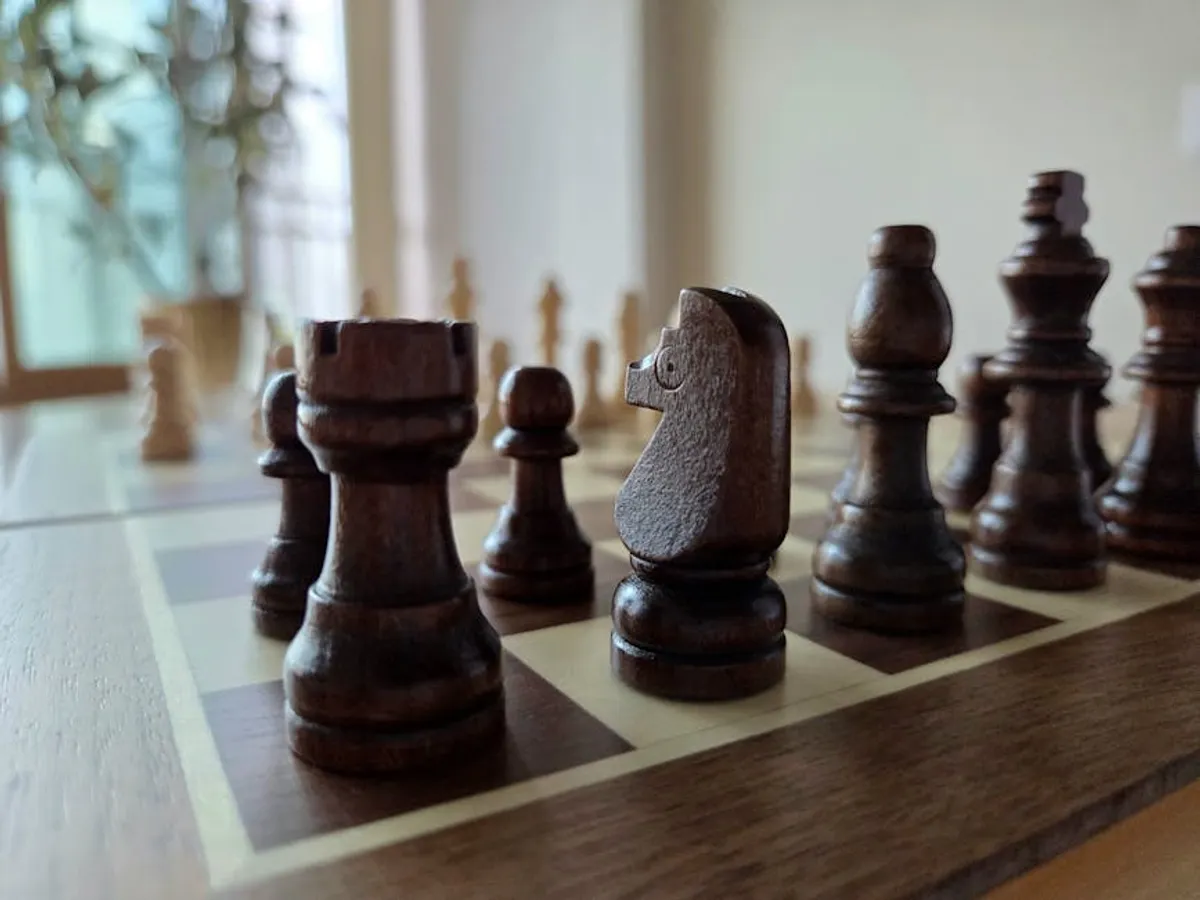
While digital interfaces are convenient, solving complex tactical puzzles on a physical board offers unique benefits. It forces you to visualize without the aid of screen highlights or immediate feedback. Manipulating the pieces physically can sometimes help in understanding spatial relationships and complex geometry that might be harder to grasp on a 2D screen. This method also reduces screen fatigue and can be particularly effective for deep, prolonged analysis of challenging positions.
Best for: Players tackling very difficult puzzles or those who find visualization challenging on a screen.
Pros: Enhances physical board vision; reduces screen dependency; can aid in understanding complex spatial relationships; offers a break from digital tools.
Cons: Less convenient than digital platforms; requires setting up a board and pieces for each puzzle.
Verdict: For the most challenging puzzles, utilize a physical board. This provides a different sensory input that can deepen understanding and improve visualization skills.
12. Integrate Puzzle Rush/Battle for Speed Training
While deep analysis is crucial, speed and accuracy under time pressure are also vital for practical play. Platforms offering "puzzle rush" or "puzzle battle" modes provide excellent training for this. These modes typically present a rapid sequence of puzzles, often with increasing difficulty, under a strict time limit. This trains your brain to quickly identify patterns and calculate efficiently, improving your tactical reflexes and decision-making speed in fast-paced game situations.
Best for: Players looking to improve their tactical reflexes, speed of recognition, and performance in faster time controls.
Pros: Develops fast tactical recognition; improves decision-making under pressure; enhances pattern recall speed; can be highly motivating.
Cons: Can encourage superficial calculation if not balanced with deep analysis; less emphasis on complex multi-move solutions.
Verdict: Incorporate speed-focused puzzle modes to sharpen your tactical reflexes and improve the efficiency of your pattern recognition and calculation under time constraints.
Measuring Progress and Optimizing Your Regimen
Effective training is iterative. To ensure your puzzle efforts are yielding results, establish clear metrics for progress. Track your puzzle rating on platforms, but don't obsess over it daily; look for trends over weeks or months. More importantly, monitor your accuracy rate for specific tactical themes. Are you consistently missing pins but improving on forks? This data informs where to focus your next training block. Keep a log of your training sessions, noting the type of puzzles solved, duration, and any significant insights or recurring errors. Ultimately, the most significant measure of success will be the transfer of these improved tactical skills to your actual games, reflected in fewer blunders and more decisive wins. Regularly review your own game blunders to identify if they stem from patterns you've failed to master in puzzles, then adjust your training to target those specific weaknesses.
Frequently Asked Questions
How often should I do chess puzzles?
Consistency is more important than duration. Aim for at least 15-30 minutes of focused puzzle solving daily, or every other day. Shorter, regular sessions are more effective for retention and skill building than infrequent, long sessions.
What is a good puzzle rating?
Puzzle ratings are relative to the platform and specific user base, so direct comparisons are difficult. Focus on your personal improvement trend rather than an absolute number. A rating that is consistently higher than your over-the-board game rating suggests your tactical potential is ahead of your practical application, while a lower puzzle rating indicates a need for more focused tactical work.
Should I use a puzzle book or an online platform?
Both have merits. Online platforms offer vast databases, immediate feedback, and often track progress automatically. Puzzle books can encourage deeper calculation without digital distractions and are excellent for practicing visualization on a physical board. A combination of both approaches often yields the best results.
How many moves deep should I calculate in a puzzle?
Calculate as many moves as necessary to reach a clear, decisive outcome (e.g., checkmate, material gain, or a winning positional advantage). For most tactical puzzles, this means calculating 3-5 moves deep for both sides. The goal is to reach a position where the advantage is undeniable and the opponent has no effective counter-play.
What if I get stuck on a puzzle for a long time?
If you're stuck for more than 5-10 minutes on a single puzzle, it's often more productive to move on or use a hint (if available) and then deeply analyze the solution. Prolonged frustration can be counterproductive. The key is to learn from the solution, not necessarily to solve every puzzle independently.