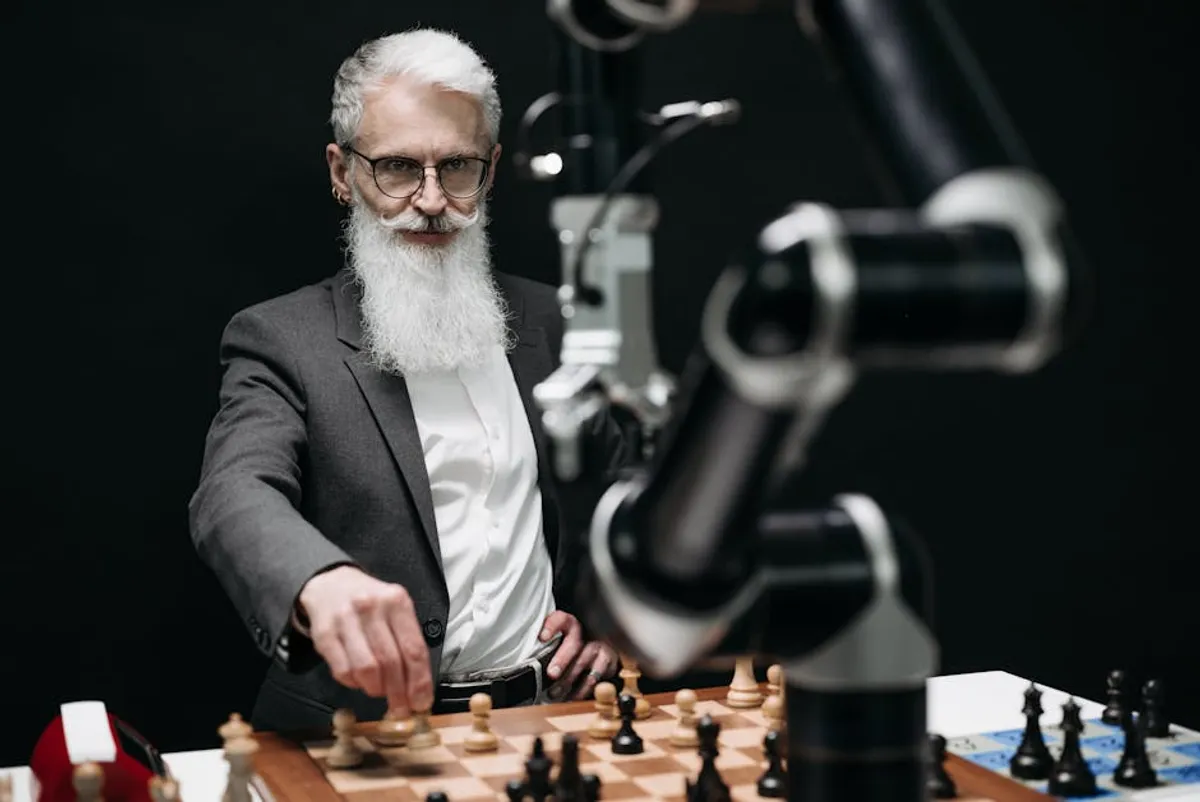
To consistently win in chess, simply reacting to your opponent's last move is insufficient. True strategic advantage stems from foresight—the ability to anticipate future board states and plan multiple moves in advance. This guide breaks down the essential components of thinking ahead in chess, providing a structured approach to evaluating positions, formulating plans, and calculating variations with greater precision. Developing this skill transforms your play from reactive to proactive, allowing you to dictate the tempo and steer the game toward your desired outcome.
Understanding Positional Thinking
Effective foresight begins not with calculation, but with a deep understanding of the current position. Before considering any specific moves, you must grasp the fundamental characteristics of the board. This foundational analysis informs all subsequent strategic decisions and tactical calculations.
Evaluating the Board State
A comprehensive assessment of the board involves several key elements. Begin by analyzing the material balance, noting any imbalances or potential exchanges. Next, examine the pawn structure, as it dictates the long-term strategic landscape, creating open files, weak squares, and potential passed pawns. King safety is paramount; identify any vulnerabilities around both kings and potential attacking avenues. Finally, assess the activity and coordination of your pieces, looking for well-placed knights, active rooks, and bishops controlling key diagonals. A piece's value is not static; it depends heavily on its current and potential activity.
Identifying Strengths and Weaknesses
Once the general board state is clear, pinpoint specific strengths and weaknesses for both sides. For your own position, identify active pieces, strong pawn chains, control of central squares, and potential outposts. Conversely, acknowledge any backward pawns, isolated pawns, weak squares, or passive pieces. Apply the same critical lens to your opponent's position. Understanding these asymmetries is crucial for formulating a plan that exploits their vulnerabilities while leveraging your own advantages. For instance, if your opponent has a weak king side, your plan might involve launching an attack there, even if it takes several moves to develop.
Developing a Strategic Plan
With a clear understanding of the position, the next step is to formulate a coherent strategic plan. This goes beyond identifying immediate threats; it involves setting long-term goals and anticipating your opponent's counterplay.
Goal Setting Beyond the Next Move
A strategic plan outlines your objectives for the next several moves, sometimes even for the entire game. These goals might include creating a passed pawn, controlling an open file, occupying a key square with a knight, exchanging a problematic piece, or initiating a king-side attack. Each move you make should contribute to one or more of these overarching goals. Avoid making moves in isolation; instead, ensure every action aligns with your broader strategic vision. This forward-looking approach prevents aimless play and ensures your moves build upon each other synergistically.
Prophylaxis and Anticipation
Prophylaxis is the art of preventing your opponent's plans before they can execute them. It requires you to actively consider what your opponent wants to achieve and how you can thwart their intentions. This involves not just looking at your own best moves, but also at your opponent's best responses and potential threats. By anticipating their moves, you can make defensive preparations, block their lines, or even turn their potential threats into opportunities for yourself.
- Identify opponent's key pieces: Which pieces are most dangerous or best positioned for an attack?
- Analyze their target squares: What squares do they want to control or attack?
- Consider their pawn breaks: How might they open lines or create weaknesses in your position?
- Look for tactical motifs: Are there any pins, forks, or skewers they could create?
- Evaluate their king safety: Are there any immediate or latent threats to their king?
Calculation Techniques for Deeper Foresight
Once a strategic plan is in place, calculation becomes the tool for verifying its viability and exploring the tactical implications of specific move sequences. This is where the rubber meets the road in thinking ahead.
The Candidate Moves Approach
Instead of randomly looking for moves, adopt a systematic approach: identify "candidate moves." These are the 2-4 most promising moves in a given position, based on your strategic goals and the immediate tactical landscape. Focus your calculation efforts on these candidates, analyzing their consequences several moves deep. This method prevents wasted mental energy on clearly inferior options and ensures you thoroughly examine the most critical lines.
Visualization and Tree Analysis
True foresight demands the ability to visualize future board states without moving the pieces. This is where "tree analysis" comes into play: for each candidate move, mentally play out your opponent's likely responses, then your responses to those, and so on, creating a branching tree of variations. The goal is to see the board clearly 3-5 moves ahead for critical lines, identifying potential traps, forced sequences, and the eventual end position of each branch.
Pro Tip: When visualizing, focus on the final position of each variation. What does the board look like after 3-4 moves? Are your pieces active? Is your king safe? Is your opponent's position weaker? This endpoint analysis helps you decide which branch is most favorable without getting lost in the intermediate moves.
Pruning Variations
Not every branch of the calculation tree needs to be explored to its absolute conclusion. Develop the skill of "pruning" variations—discarding lines that are clearly unfavorable for you, lead to a draw when you need a win, or simply don't align with your strategic goals. This selective calculation allows you to conserve mental energy and focus on the most relevant and promising lines, improving the efficiency and depth of your foresight.
Training Your Chess Brain
Like any skill, thinking ahead in chess improves with deliberate practice and targeted training.
Puzzle Solving and Tactical Drills
Regularly engage with tactical puzzles. These drills force you to calculate specific sequences, identify tactical motifs, and visualize outcomes. Start with simpler puzzles and gradually increase complexity. Consistent tactical training sharpens your ability to spot threats and opportunities quickly, which is fundamental to deep calculation.
Post-Game Analysis
After every game, regardless of the outcome, analyze your play. Use a chess engine to identify mistakes and missed opportunities. Crucially, don't just look for tactical blunders; examine your strategic decisions. Did your plan make sense? Were your moves aligned with your goals? Where did you fail to anticipate your opponent's intentions? Learning from your own games is one of the most effective ways to improve foresight.
Time Management Considerations
Thinking ahead also involves managing your time effectively, especially in timed games. Allocate sufficient time to critical positions where deep calculation is required, but avoid spending excessive time on obvious moves or lost positions. Learn to recognize when a position demands extensive thought versus when a quick, intuitive move is appropriate. This balance ensures you have enough time to think ahead when it truly matters.
Practical Steps to Elevate Your Game
Mastering the art of thinking ahead in chess is a continuous journey. Start by consciously applying positional evaluation before every move. Force yourself to identify candidate moves and visualize at least two moves deep for each. Regularly review your games to pinpoint where your foresight failed and where it succeeded. With consistent, deliberate practice, your ability to anticipate, plan, and calculate will deepen, transforming your chess game and leading to more consistent victories.
Frequently Asked Questions About Chess Strategy
What is the primary difference between tactics and strategy in chess?
Tactics involve short-term, forced sequences of moves that lead to a tangible gain (e.g., winning material, checkmate). Strategy, conversely, focuses on long-term planning, positional advantages, and achieving overarching goals over many moves, often setting the stage for tactical opportunities.
How many moves ahead should I try to calculate?
The ideal depth of calculation varies by position and skill level. Beginners might aim for 1-2 moves, while advanced players can calculate 5-7 moves or more in critical lines. Focus on calculating accurately for a few moves rather than vaguely for many. Prioritize critical variations over exhaustive calculation of every single possibility.
Is it better to focus on my own plan or counter my opponent's?
A balanced approach is best. While having your own strategic plan is crucial, neglecting your opponent's intentions is a common mistake. Effective thinking ahead involves both pursuing your goals and proactively preventing your opponent's plans through prophylactic measures. The best plans often integrate both elements.
What if I can't visualize moves accurately?
Visualization is a skill that improves with practice. Start with simple positions, trying to see just one move ahead for both sides. Use a physical board to set up positions and then try to visualize variations without moving pieces. Regular tactical puzzles are excellent for training this mental muscle, as they force you to see sequences in your mind.