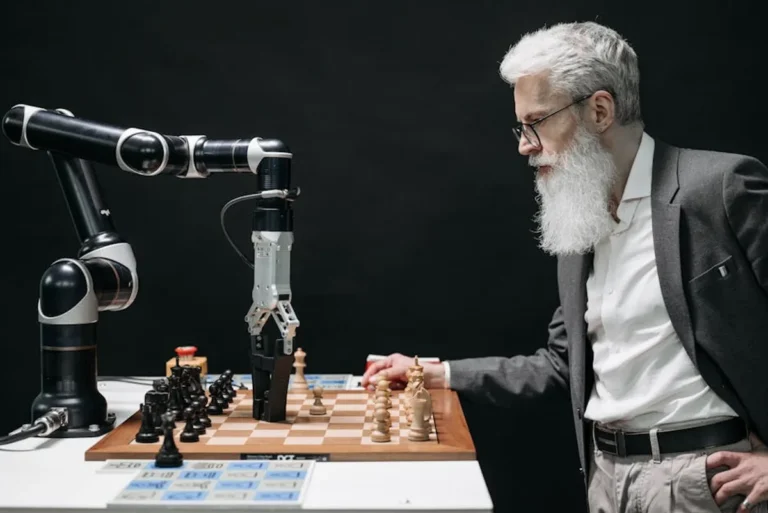
Studying famous chess games offers more than just historical appreciation; it provides a direct pathway to improving one's own play by identifying and internalizing common pitfalls. While grandmaster games often showcase brilliant strategy and flawless execution, even the greatest players have made critical errors. Analyzing these specific mistakes, rather than just memorizing opening lines or endgame positions, offers a practical framework for players to refine their decision-making and avoid similar blunders in their own competitive matches.
Opening Phase Miscalculations
The opening sets the stage for the entire game, and early misjudgments can create lasting disadvantages. Many famous games feature initial errors that, while not immediately fatal, lead to significant positional concessions or tactical vulnerabilities. These aren't always outright blunders, but subtle inaccuracies that compound over time.
Neglecting King Safety Early
One frequent mistake is to prioritize development or central control without adequate attention to king safety. A common example involves castling too late, or castling into an exposed pawn structure. In the 1892 Steinitz-Chigorin World Championship match, for instance, Steinitz often played aggressively, sometimes leaving his king less protected than optimal, leading to tactical complications. Players often replicate this by pushing pawns on the castled side without sufficient justification, creating targets for opponent attacks.
Underestimating Pawn Structure Implications
Pawn structure dictates much of a position's long-term character. Famous games reveal instances where players create weaknesses like isolated pawns, doubled pawns, or backward pawns without gaining sufficient compensation. These structural defects can become liabilities in the middlegame and endgame. A classic case is the Maróczy Bind setup, which, while solid, can lead to passive positions if not handled precisely. Misunderstanding how to break out of such structures, or how to exploit them, is a recurring error.
Middlegame Tactical and Positional Oversights
The middlegame is where most games are decided, characterized by complex interactions between pieces. Mistakes here often stem from failing to calculate deeply enough or misjudging the strategic balance.
Missing Intermediate Moves (Zwischenzug)
A common tactical error, even among strong players, is overlooking a 'zwischenzug' or intermediate move. This involves an unexpected move that changes the sequence of an anticipated exchange or combination. In many historical games, a player executes a planned sequence, only to be met by an opponent's forcing move that disrupts the original calculation. This highlights the necessity of checking for all forcing moves (checks, captures, threats) at every step of a variation.
Ignoring Opponent's Threats
Tunnel vision, or focusing solely on one's own plans, leads to overlooking direct threats from the opponent. This can manifest as failing to defend a piece, allowing a mating attack, or missing a critical pawn push. The famous 'Immortal Game' between Anderssen and Kieseritzky, while a masterpiece of attack, also features Kieseritzky's repeated failure to address Anderssen's growing threats, culminating in a spectacular sacrifice. While few games reach this level of brilliance, the underlying mistake of ignoring threats is universal.
Pro Tip: When analyzing famous games, don't just admire the winning moves. Actively pause at critical junctures and ask yourself: "What was the losing player thinking here? What did they miss?" This active inquiry helps internalize the types of errors, rather than just the solutions.
Misjudging Piece Activity and Coordination
A frequent positional mistake involves misjudging the activity of pieces or their coordination. A piece might be well-placed on paper but lack scope or influence on critical squares. Conversely, a seemingly passive piece might hold a key defensive role. Famous games often show players sacrificing material for initiative, only to find their remaining pieces lack the coordination to deliver a decisive blow, or failing to activate a key piece that could have turned the tide. This often involves underestimating the power of rooks on open files or the influence of a well-placed knight outpost.
Endgame Strategic Blunders
Endgames simplify positions but demand precise calculation and deep positional understanding. Mistakes here are often fatal due to the reduced material and direct king involvement.
Underestimating Pawn Endgames
Pawn endgames are notoriously tricky, and many famous games feature blunders where players miscalculate the race to queen a pawn or misunderstand the concept of opposition. A single tempo can decide the outcome. Even grandmasters have erred in seemingly simple pawn endgames, demonstrating the need for exact calculation and knowledge of fundamental endgame principles like the "square of the pawn" or king opposition.
Ignoring the King's Role
In the endgame, the king transforms from a vulnerable target into a powerful fighting piece. A common mistake is to keep the king passive, failing to bring it to the center to support pawns or attack opponent pieces. Many historical examples show players losing drawn endgames because their king remained on the back rank, unable to participate effectively. Activating the king is a crucial strategic shift that many players fail to make.
Lack of Knowledge of Basic Endgame Theory
Some endgame positions have known theoretical solutions, and a lack of familiarity with these can lead to errors. For example, knowing how to win a Queen vs. Rook endgame, or how to draw a Rook and Pawn vs. Rook endgame, can save or win games. Famous players have occasionally overlooked these basic principles, demonstrating that even at the highest levels, fundamental knowledge is paramount.
- Common Tactical Errors:
- Missing forks, pins, and skewers.
- Overlooking back-rank mates or simple checkmate patterns.
- Failing to see a discovered attack or check.
- Miscalculating forced sequences, especially those involving sacrifices.
- Common Strategic Errors:
- Creating permanent pawn weaknesses without compensation.
- Allowing the opponent to establish a strong outpost.
- Failing to control open files or diagonals.
- Underdeveloping pieces or leaving them uncoordinated.
Transforming Your Game Through Study
The value of analyzing famous chess games lies not just in appreciating brilliance, but in systematically identifying and learning from the common mistakes made by players at all levels. By focusing on these specific errors—from opening misjudgments to endgame oversights—you can develop a more robust understanding of chess principles and improve your own practical play. This approach transitions from passive observation to active learning, directly impacting your competitive results.
Frequently Asked Questions
Why focus on mistakes instead of brilliant moves?
Focusing on mistakes provides a more direct and actionable learning experience. While brilliant moves inspire, understanding why a strong player erred helps you recognize and avoid similar pitfalls in your own games, leading to more consistent improvement.
Should I analyze every move of a famous game?
Not necessarily. Concentrate on critical moments where the balance shifted, or where a significant error was made. Identify the decision point, the alternative options, and the consequences of the chosen move. This targeted analysis is more efficient.
How can I identify mistakes in famous games effectively?
Use a chess engine to check your own analysis, but don't rely on it entirely. Try to understand the human thought process behind the move. Look for violations of basic principles, missed tactical opportunities, or positional weaknesses created.
Are these mistakes relevant for beginner players?
Absolutely. Many fundamental errors, like neglecting king safety or miscalculating simple tactics, are universal. Learning from grandmaster mistakes can accelerate a beginner's understanding of core chess concepts and prevent them from developing bad habits.