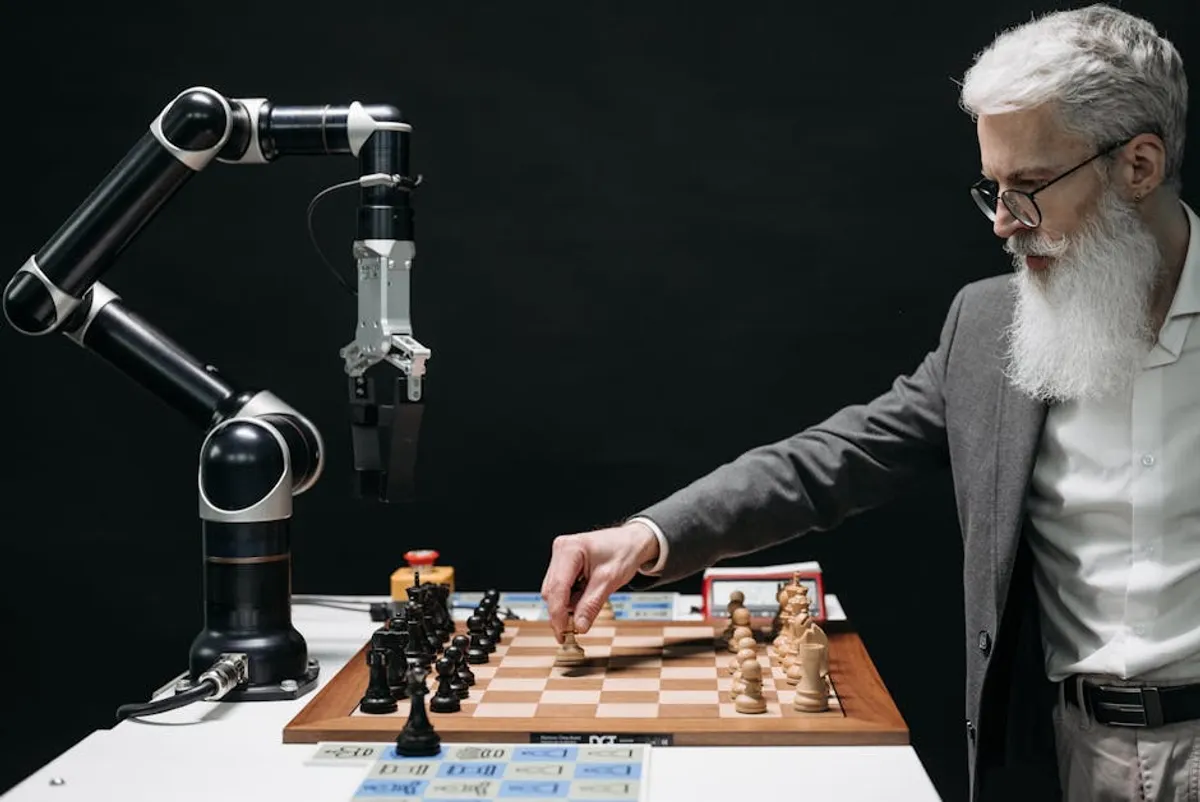
Effective chess tactics practice is not simply about solving puzzles; it requires a systematic approach to identify patterns, improve calculation, and integrate new knowledge into practical play. For any professional seeking to elevate their chess understanding, haphazard puzzle-solving yields minimal returns. A structured regimen, focused on specific tactical motifs and supported by consistent review, transforms raw problem-solving into a robust skill applicable across diverse game situations. This article outlines a framework for developing and refining tactical proficiency, moving beyond mere recognition to deep comprehension and rapid application.
Understanding Chess Tactics Fundamentals
Before diving into practice methods, a clear understanding of tactical building blocks is essential. Tactics are forced sequences of moves that result in a tangible gain, such as material advantage, checkmate, or a decisive positional improvement. Recognizing these patterns quickly is the first step.
Identifying Common Tactical Motifs
Tactics are built from a finite set of recurring motifs. Proficiency begins with instant recognition of these patterns. Key motifs include:
- Forks: A single piece attacks two or more opponent's pieces simultaneously.
- Pins: A piece is attacked and cannot move without exposing a more valuable piece behind it.
- Skewers: Similar to a pin, but the more valuable piece is in front, forcing it to move and expose a less valuable piece.
- Discovered Attacks: Moving one piece reveals an attack by another piece behind it.
- Discovered Checks: A specific type of discovered attack where the revealed attack is a check.
- Batteries: Two or more pieces aligned on a rank, file, or diagonal, exerting combined pressure.
- Deflections: Forcing an opponent's piece to move away from a critical square or defense.
- Decoys: Luring an opponent's piece to a square where it can be attacked or exploited.
- Overloads: A defender is tasked with protecting too many pieces or squares.
- Zwischenzug (Intermediate Move): An unexpected move inserted into a forced sequence, often to gain an advantage before continuing the main line.
- Clearance: Moving a piece to open a line for another piece.
Consistent exposure to these patterns, initially with clear explanations, builds foundational recognition.
The Role of Calculation in Tactical Play
Recognition is only half the battle; calculation is the other. Calculation involves visualizing future board states accurately and evaluating the consequences of each move. For tactical puzzles, this means not just spotting a fork, but calculating the opponent's responses and ensuring the fork leads to a material gain or decisive advantage. Effective calculation practice involves:
- **Candidate Moves:** Identifying all plausible moves for both sides at each step.
- **Forced Variations:** Prioritizing lines where the opponent has limited options.
- **Evaluation:** Determining the outcome of each line (e.g., +2 pawns, checkmate, draw).
- **Pruning:** Eliminating lines that clearly do not yield an advantage.
This systematic approach to calculation minimizes errors and maximizes the chances of finding the optimal solution.
Structured Approaches to Tactical Practice
Randomly solving puzzles offers limited long-term improvement. A structured approach ensures consistent growth and retention.
Problem Sets and Databases: Quantity vs. Quality
Access to tactical problem sets is widespread, ranging from free online resources to specialized software. The key distinction lies in how these are utilized. Focusing purely on quantity—solving hundreds of problems without deep analysis—is less effective than solving fewer problems with meticulous review.
Best for: Building pattern recognition and basic calculation skills.
When selecting problem sources, consider those that:
- Offer a wide range of difficulty levels, allowing for gradual progression.
- Provide immediate feedback on incorrect solutions, including the correct line.
- Categorize problems by tactical motif, facilitating targeted practice.
- Track performance metrics, such as accuracy and time per problem, to identify weaknesses.
The goal is to internalize the underlying principles, not just memorize solutions.
Spaced Repetition for Retention
Spaced repetition is a learning technique that involves reviewing previously learned material at increasing intervals over time. Applied to chess tactics, this means re-solving problems you've previously encountered, particularly those you struggled with. This method reinforces memory and strengthens the neural pathways associated with specific patterns and solutions.
Best for: Long-term retention of tactical patterns and improved recall speed.
Many tactical trainers incorporate spaced repetition algorithms, presenting problems you've missed or found difficult more frequently. This ensures that weaknesses are addressed systematically rather than being forgotten.
Blindfold Tactics and Visualization Drills
For advanced practitioners, blindfold tactics—solving problems without seeing the board—significantly enhances visualization and calculation skills. This forces the brain to construct and manipulate the board state internally, a crucial skill for complex positions in actual games.
Best for: Developing advanced visualization, deep calculation, and mental stamina.
Start with simple blindfold exercises, such as identifying the color of a square or visualizing a single piece's movement. Gradually progress to solving two-move combinations and then full tactical puzzles. This practice directly translates to improved over-the-board performance, where visualizing multiple variations is paramount.
Integrating Tactics into Your Training Regimen
Tactical practice should not be isolated but integrated into a broader training plan.
Time Management for Tactical Sessions
Consistency outweighs sporadic long sessions. Allocate dedicated, focused time for tactics. Short, daily sessions (e.g., 15-30 minutes) are often more effective than one marathon session per week. This maintains momentum and allows for regular reinforcement.
Best for: Consistent skill development and preventing burnout.
During these sessions, eliminate distractions. Focus intensely on each problem, calculating thoroughly before making a move. This deliberate practice fosters deeper learning.
Analyzing Your Own Games for Missed Opportunities
One of the most impactful forms of tactical practice comes from analyzing your own games. After each game, review it specifically for missed tactical opportunities—both for you and your opponent. Utilize engine analysis to identify critical moments where a tactical shot was available but overlooked.
Best for: Applying theoretical knowledge to practical game situations and identifying personal blind spots.
This process reveals patterns in your own play where you consistently miss certain types of tactics or fail to calculate deeply enough. This personalized feedback is invaluable for tailoring future practice.
The Value of Post-Solution Review
Pro Tip: Never just move on after solving a tactical puzzle, regardless of whether you got it right or wrong. Instead, analyze the solution: understand why the correct moves work, why incorrect moves fail, and explore alternative lines. This deepens comprehension beyond simple pattern recognition, transforming a solved puzzle into a learning opportunity.
After solving a problem, correctly or incorrectly, spend time understanding the underlying principles. If you solved it, could you have found it faster? If you failed, where did your calculation go wrong? Did you miss a key defensive resource? This meta-analysis is critical for transferring tactical knowledge from puzzles to real-game scenarios.
Measuring Progress and Adapting Your Practice
Objective measurement is crucial for effective skill development. Track metrics such as:
- Tactics Rating: Many platforms provide a rating that reflects your puzzle-solving strength. Monitor its trend.
- Accuracy Rate: The percentage of problems solved correctly. Aim for consistent improvement.
- Time Per Problem: As you improve, your ability to solve problems quickly and accurately should increase, particularly for easier puzzles.
- Specific Motif Performance: If your platform tracks this, identify which tactical themes you excel at and which require more attention.
Based on these metrics, adjust your practice. If you're consistently missing forks, dedicate more time to fork-specific problems. If your rating stagnates, consider increasing the difficulty or introducing blindfold practice. Adaptability ensures your practice remains challenging and relevant to your current skill level.
Actionable Next Steps
To implement an effective tactical practice regimen, begin by establishing a consistent daily time slot, even if short. Prioritize problem sets that offer immediate feedback and track your performance. Crucially, integrate post-solution review for every problem, dissecting both correct and incorrect attempts to understand the underlying mechanics. Finally, regularly analyze your own games to identify real-world tactical oversights, using these insights to refine your targeted practice areas. This structured approach moves beyond rote memorization, fostering a deep, applicable understanding of chess tactics.
Frequently Asked Questions
How often should I practice chess tactics?
Consistent daily practice, even for 15-30 minutes, is generally more effective than longer, infrequent sessions. This builds momentum and reinforces learning regularly.
What is the ideal difficulty level for tactical puzzles?
Aim for puzzles where you solve approximately 60-80% correctly. If it's too easy, you're not challenged; if it's too hard, you risk frustration and minimal learning. Many platforms adjust difficulty dynamically.
Should I use a timer when solving tactics?
Initially, focus on accuracy without a timer to develop sound calculation habits. Once accuracy is high, gradually introduce time limits to improve speed and efficiency, mimicking game conditions.
How do I know if my tactical practice is effective?
Track your tactics rating, accuracy, and time per problem. More importantly, observe if you are spotting and converting tactical opportunities more frequently in your actual games, and if your calculation errors are decreasing.